
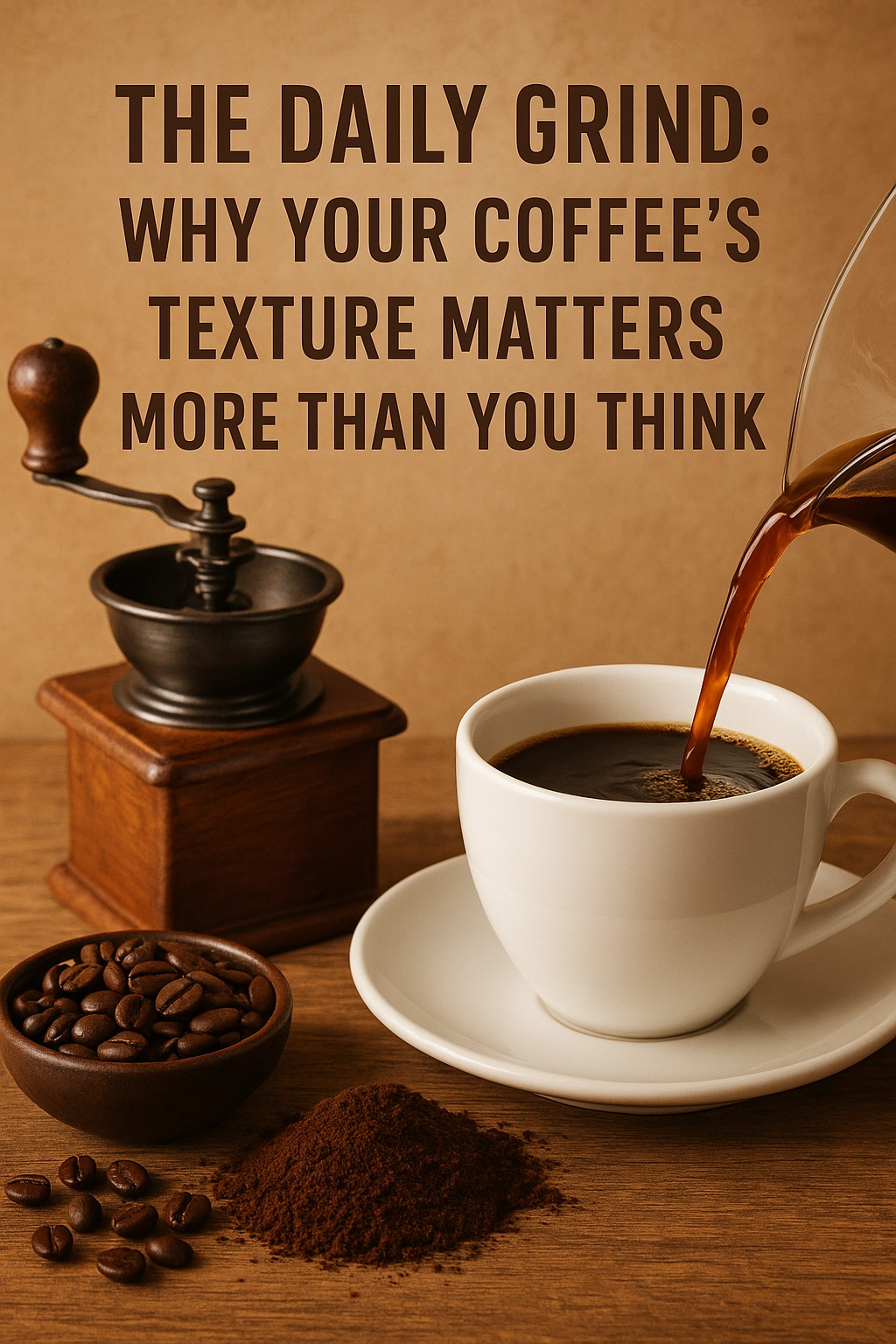
If coffee beans are the soul of your cup, the grind is its heartbeat — the small, rhythmic pulse that determines whether your brew sings or sulks. Grind quality might seem like a tiny detail, but it has enormous influence over flavour, body, aroma, caffeine kick, and even how long your coffee stays fresh.
So let’s break down why grind size matters, what happens when it goes wrong, and how to match your grind to your brewing method like an absolute pro.
Why Grind Quality Makes or Breaks Your Coffee
When coffee is ground, you’re increasing its surface area — and that’s what allows water to extract flavour, oils, aromatics, and caffeine. But the trick is hitting the right grind size, because:
- Too coarse → under-extracted, weak, sour
- Too fine → over-extracted, bitter, harsh
- Inconsistent grind (big chunks + powder) → the worst of both worlds
A great grind is consistent, purposeful, and perfectly matched to your brew method.
Flavour: The First Thing to Improve — or Ruin
A Good Grind Unlocks Flavour
A consistent grind means water extracts evenly.
Your coffee tastes clear, balanced, nuanced — the way the roaster intended.
A Bad Grind Muddies Everything
With an inconsistent grind, big pieces under-extract while tiny dust particles over-extract.
The result? A cup that’s confused, unbalanced, sour and bitter at the same time — the dreaded “Why does this taste like I made it in a hotel room?” effect.
Caffeine Content: Yes, Grind Size Changes That Too
The finer the grind, the more caffeine you extract.
- Fine grind = more surface area = stronger, more caffeinated brew
- Coarse grind = slower extraction = softer caffeine hit
This is why espresso (very fine grind) is strong and punchy, while French press (coarse grind) is full-bodied but gentler.
Freshness: Your Grind Determines How Long Your Coffee Stays at Its Best
Once coffee is ground, it loses freshness quickly due to oxygen exposure.
But the grind size accelerates that “flavour escape” at different speeds:
- Fine grind: Goes stale the fastest
- Medium grind: Moderately fast
- Coarse grind: Holds freshness a bit longer
If you want your coffee to stay vibrant, grind only what you need each time — your taste buds will thank you.
Choosing the Right Grind for Every Brew Method
Different brewing methods need different grind sizes because each uses water, time, and pressure differently. Here’s your quick cheat sheet:
Very Fine Grind
- Best for: Espresso, Moka pot, Turkish coffee
- Why: Pressure-based brewing needs high surface area for quick extraction
Fine Grind
- Best for: Aeropress (short brew), some pour-overs
- Why: Slightly slower than espresso but still fast-moving
Medium Grind
- Best for: Drip machines, most pour-overs (V60, Kalita), Aeropress (longer brew)
- Why: Balanced extraction for steady water flow
Medium-Coarse Grind
- Best for: Chemex, clever dripper
- Why: Cleaner cup, slower extraction, great for highlighting delicate flavours
Coarse Grind
- Best for: French press, cold brew
- Why: Long steep times require chunky grounds to avoid bitterness
Pros and Cons of Grind Quality at a Glance
Positive Effects of a Good Grind
- Balanced flavour
- Smoother body
- Enhanced aromatics
- Better caffeine control
- Cleaner finish
- Consistent brewing results
Negative Effects of a Poor Grind
- Muddy or hollow flavour
- Sourness, bitterness, or both
- Weak or overly strong brews
- Faster staling
- Sludge or sediment (looking at you, blade grinders)
So What’s the Real Secret? Fresh Beans + The Right Grind = Magic
Grind quality is one of the easiest ways to level up your coffee at home. You don’t need fancy equipment — just a decent burr grinder and a sense of what your brewing method needs.
Think of it this way:
Your beans set the stage.
Your grinder decides the performance.
Don’t let all that grind knowledge go unused — give your mornings something to brag about. Grab a bag of Foxhole Coffee and brew the kind of cup that makes you wonder why you ever settled for anything less.